

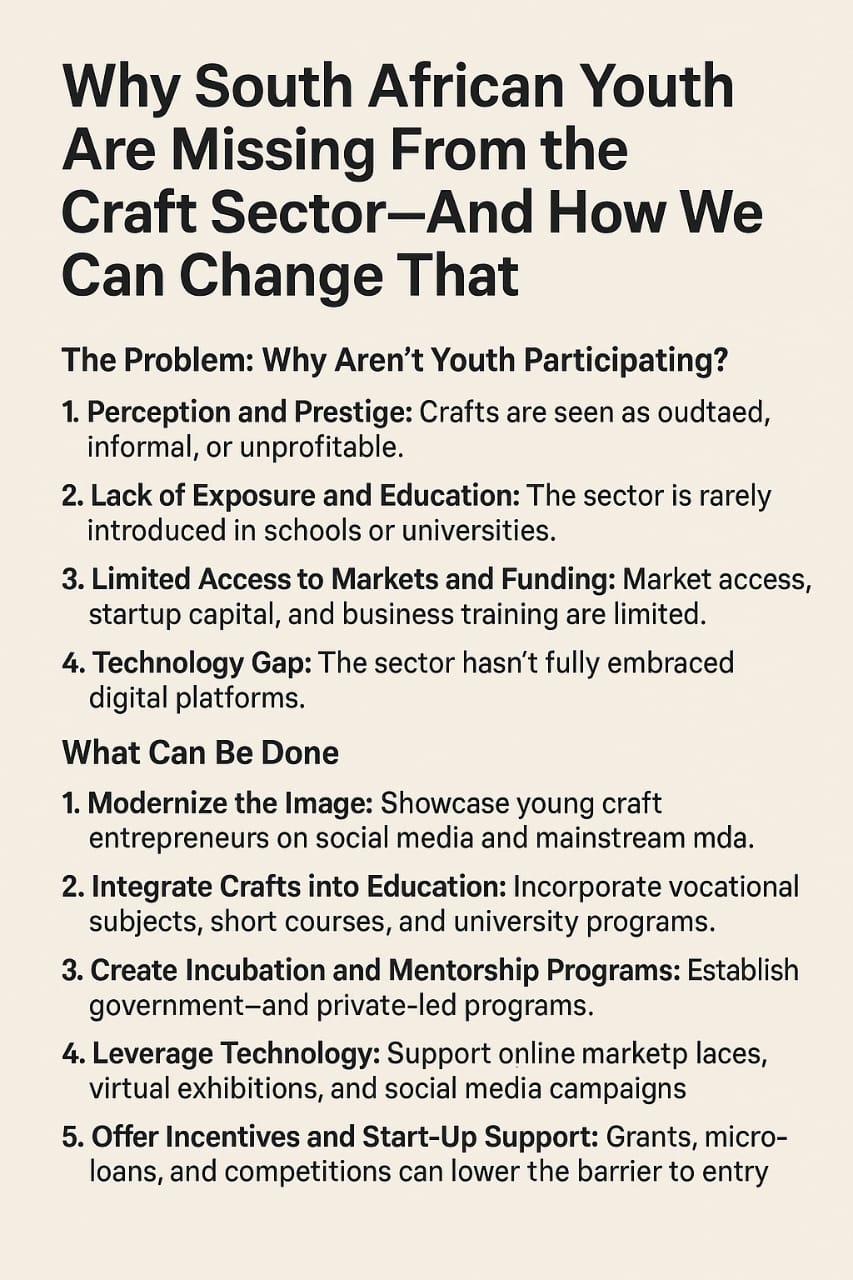
Why South African Youth Are Missing From the Craft Sector—And How We Can Change That
South Africa’s craft sector tells the story of its people—woven, carved, painted, and molded into objects that carry cultural and economic value. From beadwork to pottery, woodwork to textile arts, this sector not only preserves tradition but holds vast potential for job creation, entrepreneurship, and sustainable growth.
Yet, a troubling reality persists: South Africa’s youth are largely absent from this space.
The Problem: Why Aren’t Young People Participating?
Despite high youth unemployment and a demand for new economic opportunities, young South Africans are disengaged from the craft sector. This disconnect is driven by several factors:
- Perception and Prestige: Many youth view crafts as an outdated, informal, or unprofitable industry. With societal pressure to pursue white-collar jobs, few consider crafts a viable career.
- Lack of Exposure and Education: Crafts are rarely featured in school curricula or promoted at tertiary institutions. Without early exposure, the sector remains invisible.
- Access to Capital and Markets: Even when youth are interested, they face high barriers—limited funding, poor infrastructure, and inadequate access to local or international markets.
- Tech Disconnection: While the youth thrive on digital platforms, much of the craft economy remains offline and under-digitized.
Why It Matters
Reviving youth interest in crafts is not just a cultural mission—it’s an economic one. South Africa’s creative economy has potential to grow rapidly with the right investment. Engaging youth can drive innovation, digital transformation, and fresh market ideas in a sector rooted in tradition.
What Needs to Happen: A Multi-Stakeholder Approach
- National Crafter’s Association (NCA)
Youth Inclusion Strategy: Develop a national strategy aimed at integrating youth voices and leadership into the craft movement.
Digital Training Programs: Partner with tech platforms to train young crafters in e-commerce, digital marketing, and online sales.
Showcase Youth Talent: Launch national exhibitions and craft competitions with dedicated categories for under-35 participants to raise visibility and prestige.
- National Youth Development Agency (NYDA)
Start-up Grants and Mentorship: Allocate specific funding streams for youth in creative industries, including crafts. Match young crafters with experienced mentors.
Entrepreneurship Bootcamps: Host craft-focused business development programs, particularly in rural and township areas.
Awareness Campaigns: Use NYDA’s media reach to promote success stories of young craft entrepreneurs.
- Small Enterprise Development Agency (SEDA)
Craft Incubation Hubs: Establish regional craft hubs that provide workspace, tools, internet access, business training, and access to market data.
Product Development Support: Offer design and branding assistance to help young crafters create market-ready products.
Access to Local and Global Markets: Facilitate youth participation in trade shows and export training for crafts with global appeal.
- Department of Small Business Development
Policy Support and Incentives: Create policies that formally recognize craft as part of the small business economy, with tax incentives and subsidies for youth-owned craft businesses.
Curriculum Integration: Collaborate with the Department of Education to integrate craft skills and entrepreneurship into schools and TVET colleges.
National Strategy for Creative SMEs: Develop a national framework that positions creative sectors, including crafts, as central to youth employment and GDP contribution.
Crafting a Youth-Led Future
South Africa’s youth are not uninterested in creativity—they are entrepreneurs, designers, and storytellers by nature. What’s needed is a clear invitation and structured support. With coordinated effort, policy commitment, and modernized systems, the craft sector can become a thriving space for youth innovation and employment.
It’s time to hand the tools over. Let them carve, stitch, and shape a new future—one where tradition meets transformation.

Leave a Reply