

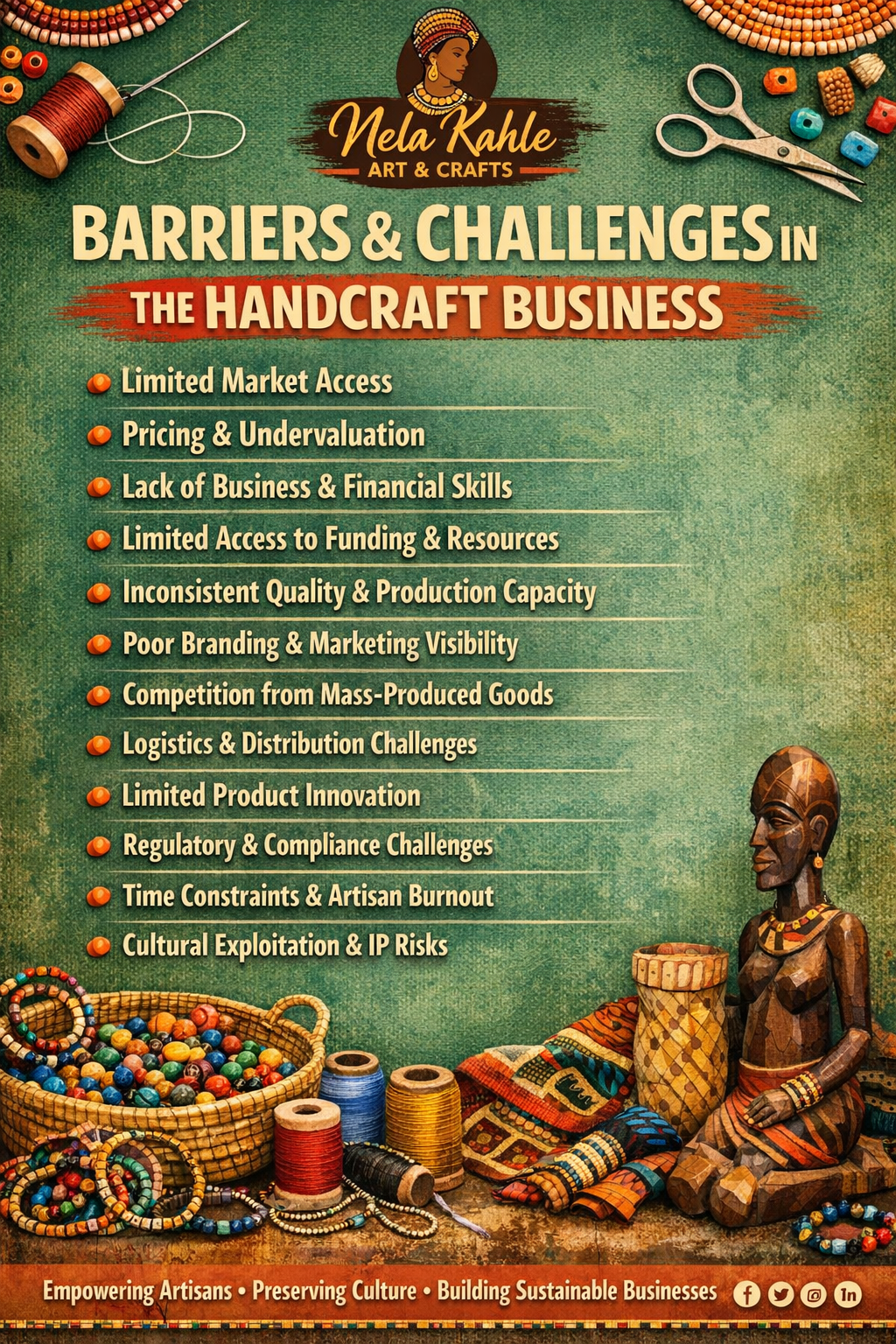
1. Limited Access to Markets
Many artisans struggle to access consistent and profitable markets.
- Dependence on local markets with low buying power
- Limited exposure to national and international buyers
- Difficulty accessing formal retail and export markets
2. Pricing & Undervaluation of Work
Handcrafted products are often undervalued.
- Customers compare handmade items with cheap mass-produced goods
- Artisans underprice due to lack of costing skills
- Time, skill, and cultural value not fully recognised
3. Lack of Business & Financial Skills
Many artisans are skilled creators but lack business knowledge.
- Poor record-keeping and cash flow management
- Limited understanding of costing, pricing, and profit margins
- Difficulty separating personal and business finances
4. Access to Funding & Resources
Securing capital remains a major challenge.
- Limited access to grants, loans, or investment
- High cost of quality materials and tools
- Cash flow challenges for bulk production
5. Inconsistent Quality & Production Capacity
Meeting market standards consistently can be difficult.
- Variation in product quality
- Limited ability to meet large or urgent orders
- Lack of standardisation and quality control systems
6. Limited Branding & Marketing Skills
Many handcraft businesses lack strong visibility.
- Weak branding and packaging
- Limited digital marketing skills
- Inconsistent social media presence
7. Competition from Mass-Produced Goods
Handcrafted products compete with cheaper factory-made items.
- Imports flooding local markets
- Customers prioritising price over authenticity
- Difficulty explaining the value of handmade work
8. Logistics & Distribution Challenges
Getting products to customers is often costly and unreliable.
- High courier and postage costs
- Delays and damages during delivery
- Limited access to reliable distribution networks
9. Lack of Product Innovation
Without exposure and mentorship, designs can become repetitive.
- Over-reliance on traditional designs without adaptation
- Difficulty responding to changing market trends
- Limited access to design development support
10. Regulatory & Compliance Barriers
Formalising a craft business can be complex.
- Lack of business registration knowledge
- Compliance costs and paperwork
- Limited understanding of tax and regulatory requirements
11. Time Constraints & Burnout
Many artisans juggle multiple responsibilities.
- Crafting, marketing, selling, and administration done by one person
- Physical strain from manual work
- Emotional burnout due to financial pressure
12. Cultural & Intellectual Property Risks
Traditional designs are often exploited.
- Cultural designs copied without credit or compensation
- Lack of protection for indigenous knowledge
- Limited awareness of intellectual property rights
🌱 Conclusion
Despite these challenges, the handcraft sector remains a powerful tool for economic empowerment, cultural preservation, and community development. Addressing these barriers through skills training, mentorship, market access, and supportive policies can unlock sustainable growth for artisans.

Leave a Reply