


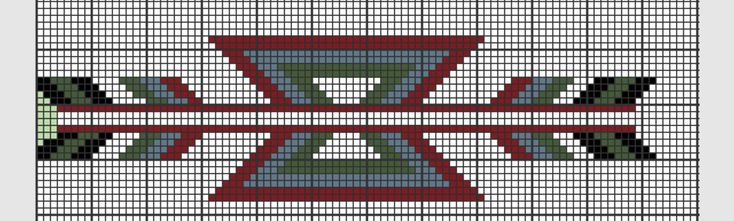
Following a pattern design sketch is of paramount importance when creating Zulu, Xhosa, or Ndebele beadwork, for several crucial reasons:
- Cultural Significance and Communication: Traditional beadwork among these Southern African groups is far more than mere adornment; it’s a rich system of communication. Colors, patterns, and motifs all carry specific meanings related to social status, age, marital status, clan affiliation, personal messages (like love tokens), and even spiritual beliefs. A design sketch ensures that these intricate meanings are accurately conveyed and preserved, preventing misinterpretation or the loss of vital cultural information.
- Accuracy and Authenticity: Each culture has its distinct aesthetic and established patterns. A design sketch helps maintain the authenticity of the beadwork by providing a visual guide to follow. This is particularly important for traditional pieces where specific geometric shapes, arrangements, and color combinations are historically and culturally defined. Deviating from these can diminish the piece’s cultural value and recognition.
- Complexity and Intricacy: Zulu, Xhosa, and Ndebele beadwork often involves highly intricate and labor-intensive designs. Trying to execute such complex patterns freehand without a sketch can lead to errors, inconsistencies, and a less polished final product. A sketch acts as a blueprint, allowing the beadworker to plan the placement of each bead, ensuring symmetry, alignment, and the correct formation of motifs.
- Efficiency and Material Management: Beadwork requires a significant amount of time and materials. A well-executed design sketch helps in:
- Estimating materials: Knowing the exact pattern and size helps calculate the number and colors of beads needed, reducing waste and ensuring the project can be completed without running out of specific beads.
- Saving time: With a clear guide, the beadworker can work more efficiently, reducing the need for undoing mistakes or improvising.
- Passing Down Knowledge: In many cases, beadwork skills and patterns are passed down through generations. Design sketches can serve as valuable educational tools, documenting traditional patterns and techniques for future generations of beadworkers. This helps in the continuity and preservation of this indigenous art form.
- Consistency in Production (especially for contemporary pieces): While traditional beadwork often has variations, if a beadworker aims for consistency across multiple pieces or for commercial purposes, a sketch provides a standard to adhere to.
- Artistic Planning and Refinement: Even for experienced beadworkers, a sketch allows for pre-visualization and refinement of the design. They can experiment with color combinations, adjust the scale of patterns, and ensure the overall aesthetic appeal before committing to the actual beading, which is a time-consuming process.
In essence, a pattern design sketch is not just a preliminary drawing; it’s a crucial tool that upholds the cultural integrity, artistic quality, and practical efficiency of Zulu, Xhosa, and Ndebele beadwork.

Leave a Reply