

We educate handcrafters about the role of AI in today’s craft industry:
⸻
Embracing AI in Handcrafting: A New Era of Creativity
The world of handcrafting is evolving — and Artificial Intelligence (AI) is part of that journey. Today, your customers may walk in with designs created by AI: beadwork outfits, accessories, and home décor imagined through smart tools. They will ask you, the skilled crafter, to bring those visions to life — in traditional, contemporary, or fusion styles.
What does this mean for you as a handcrafter?
• Stay Relevant: AI is not replacing crafters — it’s enhancing creativity. Use it to inspire, plan, and design better.
• Learn to Interpret Designs: Customers will show you AI-generated images. You must be ready to interpret them and translate them into beadwork or wire creations.
• Offer Style Options: Know the difference between traditional, contemporary, and fusion so you can guide clients and price accordingly.
• Use AI Too: You can use AI to develop your own product ideas, create marketing images, or test new combinations of beads and wire styles.
Nela Kahle Arts & Craft Skills Development Academy encourages crafters to embrace innovation without losing the heart of handmade heritage. The future of crafting is both high-tech and hands-on.
Let’s stitch tradition with innovation — one bead at a time.
⸻
A customer will get help from ai to decide if she want to be traditional or contemporary or fudion
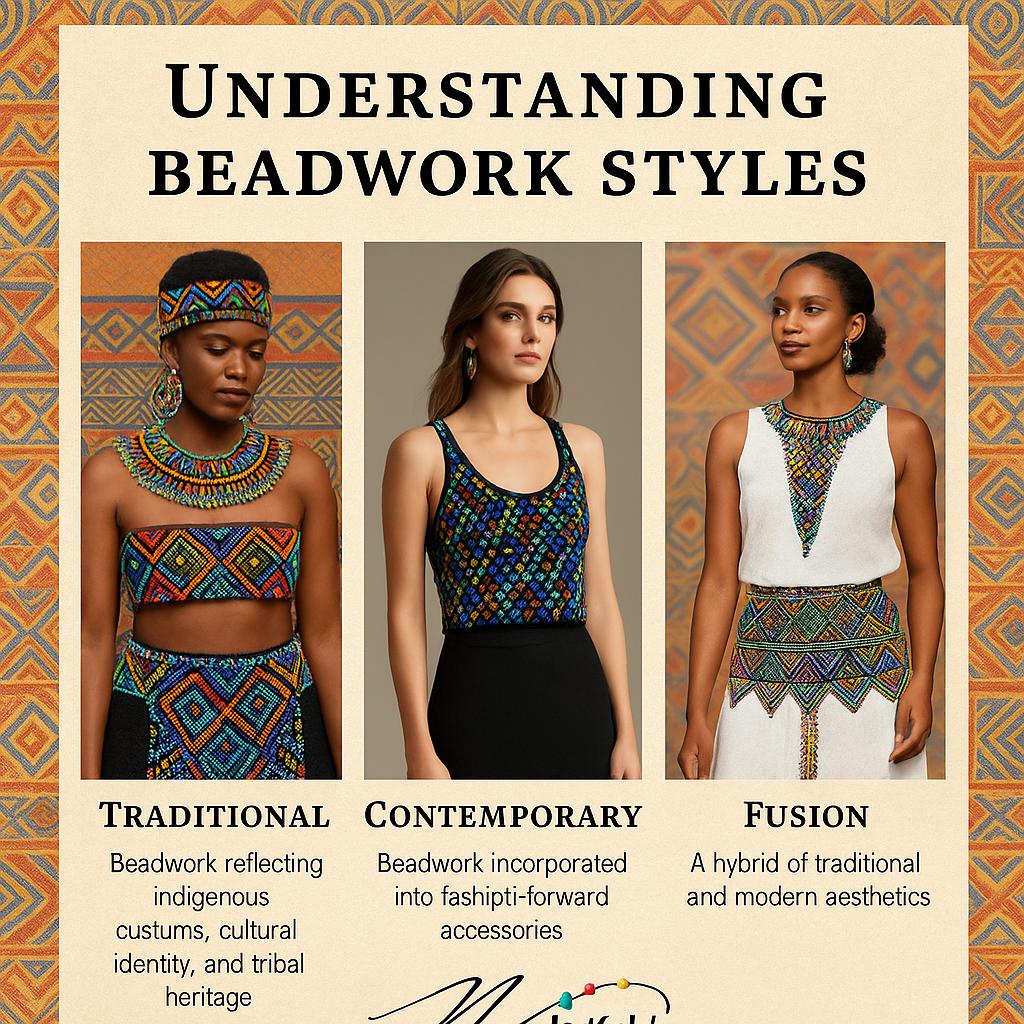
Understanding the differences between traditional, contemporary, and fusion beadwork helps you create and appreciate beadwork more intentionally—especially for design, training, or marketing purposes.
- Traditional Beadwork
Definition:
Rooted in indigenous or cultural heritage, traditional beadwork follows historical styles, techniques, and symbolism passed down through generations.
Features:
• Uses tribal or ethnic patterns (e.g., Zulu, Ndebele, Xhosa, Maasai).
• Beads are sewn or woven using age-old techniques like off-loom stitching or hand threading.
• Designs convey cultural identity, social status, or ritual significance.
• Materials are often natural or heritage-specific, like glass seed beads and cotton threads.
• Common items: necklaces, aprons, skirts, headpieces, ceremonial wear.
Purpose:
Celebration, initiation, storytelling, or heritage preservation.
⸻
- Contemporary Beadwork
Definition:
Modern, trend-aligned beadwork that may use new techniques or materials but still focuses on bead as a decorative element.
Features:
• Uses modern patterns, abstract designs, or trend-driven colors.
• Integrates with current fashion like denim, leather, chiffon.
• May use mixed materials: metal, plastic, fabric, crystals.
• Often machine-aided or digitally designed.
• Common items: beaded handbags, jackets, heels, jewelry, etc.
Purpose:
Style, fashion, or artistic expression—often sold commercially.
⸻
- Fusion Beadwork
Definition:
A blend of traditional and contemporary elements to create something culturally rooted but modern and wearable today.
Features:
• Combines heritage motifs with modern cuts or silhouettes.
• Example: a pencil skirt made with a beaded Ndebele pattern.
• May incorporate Western tailoring with African patterns.
• Uses both traditional techniques and modern tools.
• Appeals to audiences who value both identity and modernity.
Purpose:
Bridges culture and fashion, often used in high fashion, heritage celebrations, and global markets.

Leave a Reply