

What could be the reasons behind this price reduction?
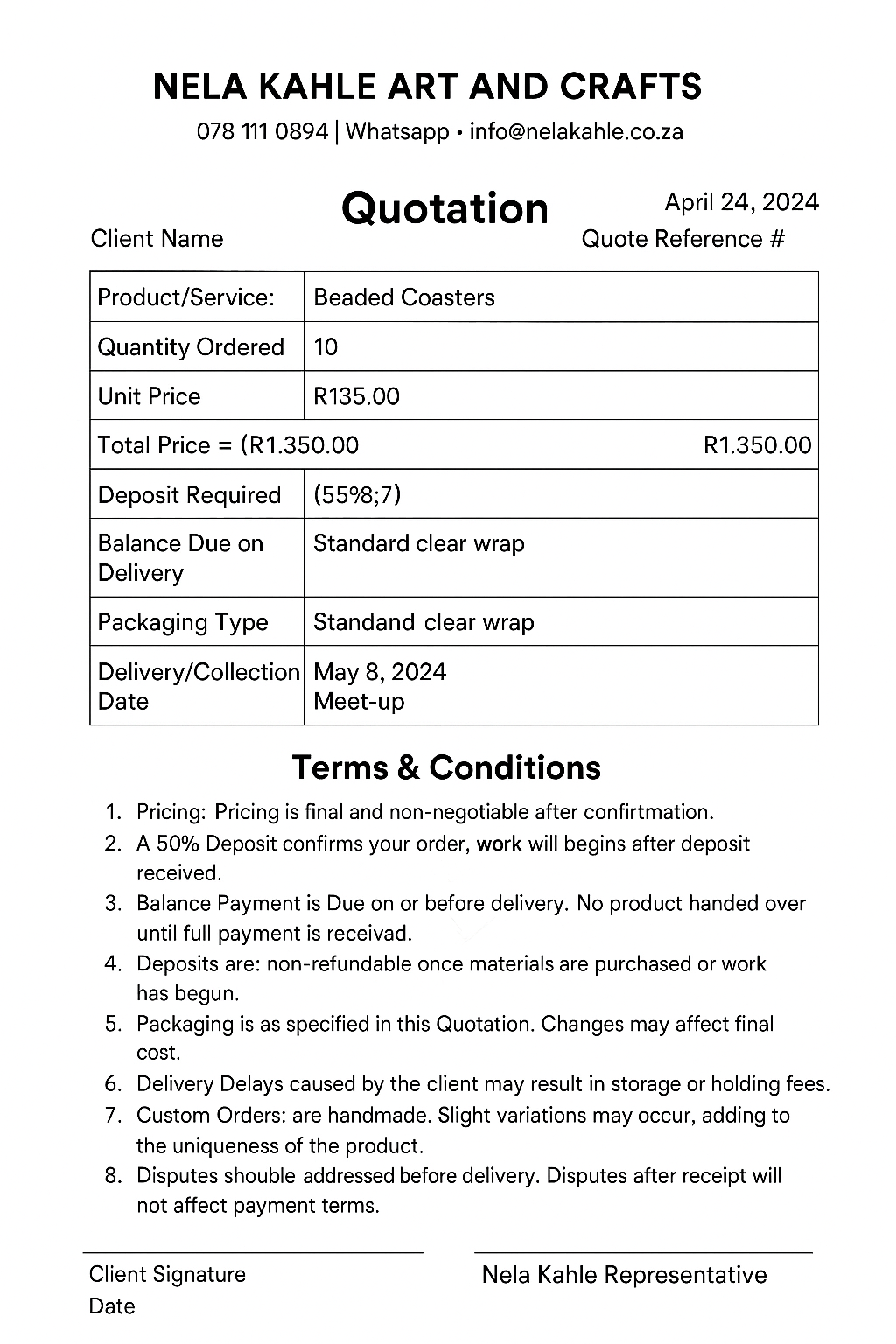
Certainly. Here’s an expanded list of possible reasons a customer might try to reduce the agreed-upon price upon delivery, specifically in a craft or handmade business context like yours:
1. Buyer’s Remorse or Financial Pressure
- After placing the order and paying the deposit, the customer may have experienced financial constraints or changed priorities, making them unwilling or unable to pay the full amount.
- Sometimes clients only realize the full cost later and regret agreeing to it.
2. Undervaluing Handmade Work
- Customers often underestimate the value of handmade or artisanal work. They may assume it costs less to produce or fail to understand the labor-intensive process involved in beadwork.
- Without awareness of the craftsmanship involved, they may feel R135 is “too much” and try to justify a lower price.
3. Comparison With Market Competition
- The client may have seen cheaper or machine-made versions of coasters elsewhere and now wants to pay based on that comparison.
- This is common when there’s no clear branding, quality distinction, or storytelling around your product to justify the price.
4. Packaging or Presentation Issues
- If the packaging doesn’t appear professional or consistent with the price they’re paying, the customer might use that as leverage to negotiate a lower price.
- They might feel the final product presentation doesn’t reflect the cost—even if the product itself is high quality.
5. No Written Terms & Conditions
- If there was no formal contract or written agreement outlining the price, payment terms, non-refundable deposits, and final payment expectations, the customer may feel entitled to renegotiate.
- Verbal agreements often leave room for misunderstanding or manipulation.
6. Miscommunication or Lack of Clarity
- They may claim the final price was unclear or that they understood R135 as a maximum, negotiable, or inclusive of other costs.
- A lack of a detailed invoice or quote can lead to such disputes.
7. Strategic Bargaining at Final Stage
- Some clients intentionally wait until delivery to negotiate because they know the seller has already invested time and materials.
- They may assume you’d rather accept less than take the product back or lose the sale.
8. Perceived Lack of Professionalism
- If the transaction wasn’t managed professionally (e.g., no invoice, no clear quote, informal language), clients may feel they can push boundaries.
- Businesses that don’t appear firm in their policies are often seen as negotiable.
9. Lack of Deposit Terms
- If the deposit amount or its purpose (e.g., to secure materials, confirm order) wasn’t clearly defined, the client may feel free to renegotiate the balance or demand refunds.
Recommendations Going Forward:
- Always Provide a Written Quote that includes:
- Unit price
- Quantity
- Total price
- Deposit amount and due date
- Balance payment and due date
- Packaging details
- Delivery expectations
- A short list of terms (e.g., “No changes to price upon delivery”)
- Clarify Packaging Quality upfront—mention if it’s gift-ready, eco-friendly, or basic packaging so expectations are managed.
- Use Invoices or Order Forms for professionalism and clarity.
- Introduce Non-Negotiable Terms for custom or handmade orders—especially after work has begun or materials are purchased.
- Educate Customers through social media or brochures about the process and effort behind your handmade work to build perceived value.

Leave a Reply